
Every “invest in hotels” pitch — REIT, franchise, branded residence, private fund — is selling a different slice of the same industry. Before comparing any specific project, it’s worth understanding what you’re actually buying, and why.
What “hotel investment” actually means
The phrase covers four genuinely different structures, and they behave nothing alike. A hotel REIT share and a deeded branded-residence unit are both “hotel investments” in casual conversation, but one is a liquid security and the other is a physical asset with a title deed. Here’s how the four main routes compare:
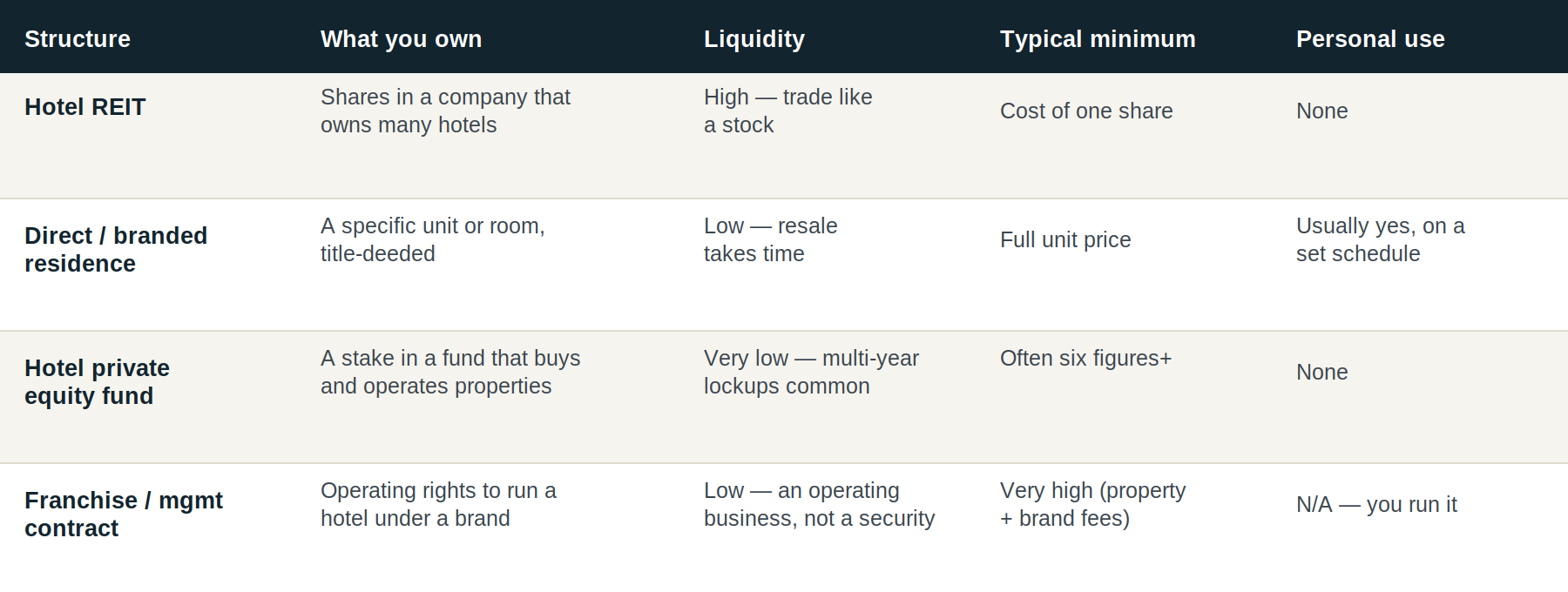
None of these is objectively “better.” A REIT suits someone who wants hospitality exposure with stock-market liquidity and no involvement. A branded residence suits someone who wants a hard asset, a income stream, and the option to use the property themselves. The right structure depends entirely on what you’re optimizing for — which is the subject of the next pillar in this series.
Why investors are paying attention to hospitality right now
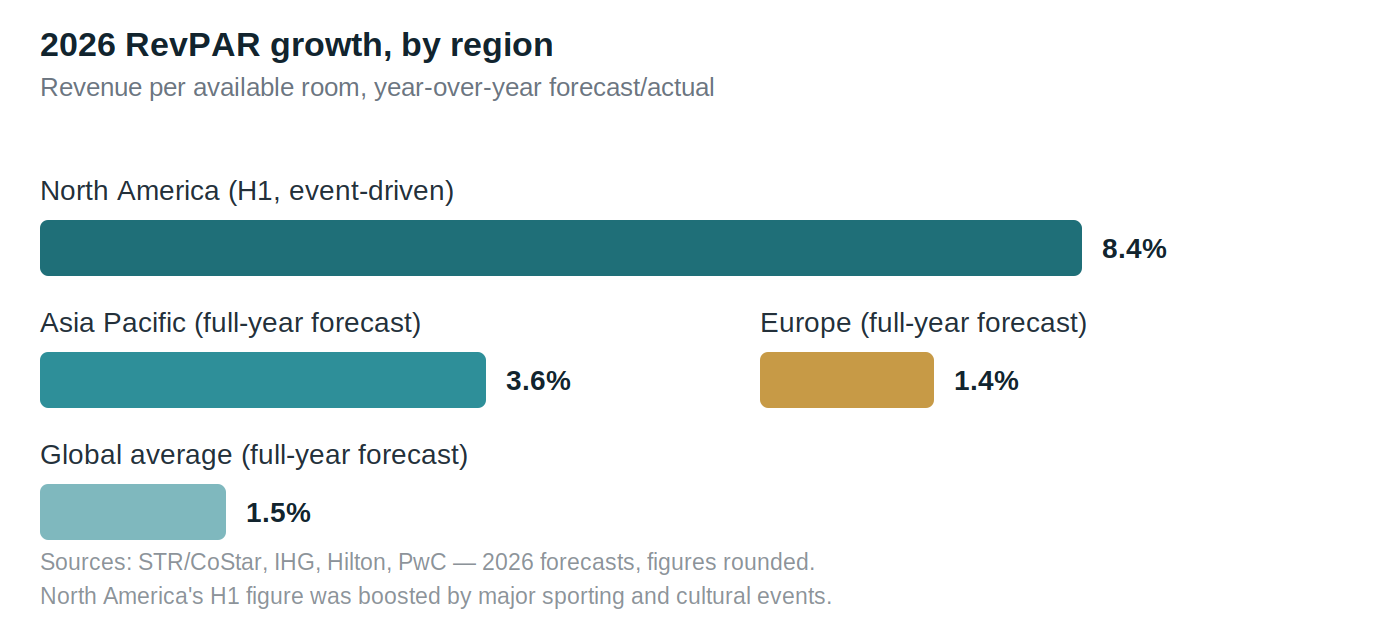
Hotel performance in 2026 tells a more nuanced story than “travel is booming.” Across most major markets, occupancy has largely plateaued — the post-pandemic recovery in room-nights has run its course. What’s still growing is average daily rate, meaning hotels are earning more per room sold rather than filling more rooms. That distinction matters for investors: revenue growth driven by pricing power tends to be more durable than growth driven by a travel boom, because it reflects genuine demand for specific properties rather than a temporary surge.

Two other trends are shaping investor interest specifically in emerging coastal and resort markets. First, capital that had been sitting on the sidelines since 2022–23 is actively redeploying into hospitality — private equity accounted for roughly a third of first-quarter 2026 U.S. hotel transaction volume, and family offices and high-net-worth buyers are a growing share of that pool globally. Second, that capital is increasingly chasing markets where supply is still catching up to demand, rather than saturated gateway cities — which is exactly the profile of frontier resort coastlines currently attracting first-wave branded development.
How returns actually work in a hotel investment
Whatever structure you choose, the return is built from up to three separate components, and it’s worth pulling them apart before you evaluate any specific pitch:
Risk factors every first-time hotel investor should understand
Seasonality
Resort and coastal properties can see occupancy swing dramatically between peak and off-season months, which affects both income and any guaranteed-yield structure’s underlying economics.
Operator dependency
Your returns rest heavily on the management company running the property well. A great location under weak management underperforms; check the operator’s track record, not just the brand.
Liquidity
Unlike a REIT share, a physical hotel unit can take months or years to resell. Only commit capital you won’t need on short notice.
Construction / delivery risk
If you’re buying pre-completion, delays, cost overruns, or developer distress can affect both timeline and the value of the finished asset.
Currency and jurisdiction
Cross-border hotel investments introduce currency exposure and a legal system you likely don’t know as well as your home market — budget time for real due diligence.
Yield guarantee structure
“Guaranteed” yield is only as strong as the entity guaranteeing it. Understand who is contractually on the hook, and for how long, before treating a headline yield number as fact.
Who hotel investing is actually suited for
Most disappointment in this asset class comes from mismatched expectations, not bad projects. Three broad profiles tend to do well with hotel investing — see which sounds like you:
The income-seeker
Wants a predictable cash yield from a hard asset, is comfortable with lower liquidity than a REIT, and is choosing between hotel income and other yield-bearing real estate.
The growth investor
Is buying early in a market’s development cycle — often pre-completion — and is primarily underwriting capital appreciation as the area matures, with income as a secondary benefit.
The lifestyle buyer
Wants guaranteed personal-use weeks in a destination they’d visit anyway, and treats any rental income as an offset against ownership costs rather than the primary goal.
None of these profiles is more “correct” than the others — but which one you are should determine which specific project and structure makes sense, not the other way around.